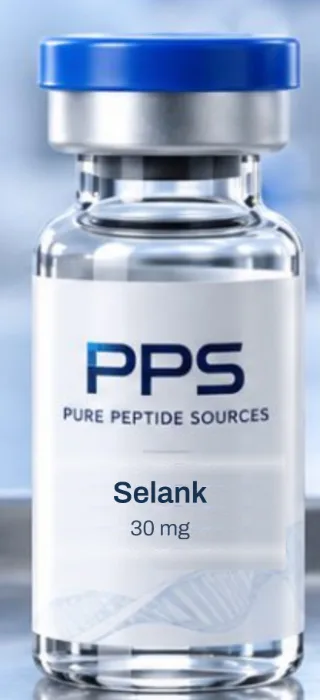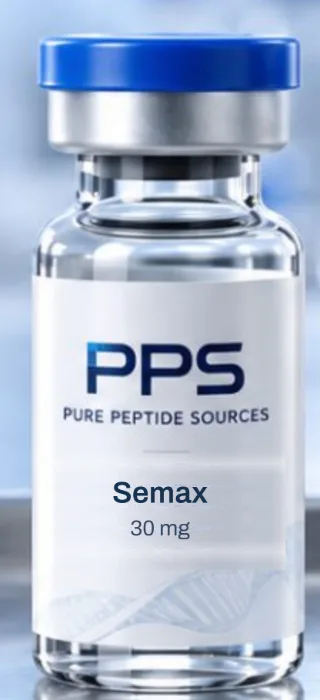
Semax
30 mg
Heptapeptide ACTH 4-10 analogue, 30 mg per vial.
- Sequence
- MEHFPGP
- Storage
- Refrigerated
Comparison
Two Russian-developed heptapeptides, nearly always mentioned together and routinely confused. They derive from entirely different parent molecules and are studied in different domains.
Semax comes from a stress hormone fragment with the hormonal part engineered out, and sits in cognition and neuroprotection research. Selank comes from an immune peptide and sits in anxiolytic and GABAergic research. They share a Pro-Gly-Pro stabilising tail and a country of origin, and very little else.
| Property | Semax | Selank |
|---|---|---|
| Parent molecule | ACTH fragment 4-10 | Tuftsin, an immunomodulatory tetrapeptide |
| Sequence | MEHFPGP | TKPRPGP |
| Molar mass | 813.9 g/mol | 751.9 g/mol |
| Primary research domain | BDNF expression, attention, neuroprotection | Anxiolytic and GABAergic signalling |
| Hormonal activity | ACTH hormonal activity removed by design | No hormonal activity |
| Stabilised variant | N-Acetyl Semax Amidate | N-Acetyl Selank Amidate |
| Price | $58.00 · 30 mg | $58.00 · 30 mg |
Only structurally, and only at the tail. Both carry a Pro-Gly-Pro terminal sequence added for stability, but Semax derives from an ACTH fragment and Selank from tuftsin, which are unrelated parent molecules.
Acetylating the N-terminus and amidating the C-terminus slows enzymatic degradation, giving a longer exposure window at the same underlying sequence. Both compounds are stocked in modified and unmodified form.
They frequently are, because their research domains are adjacent but distinct, which makes a combined protocol a reasonable way to separate cognitive from anxiolytic endpoints.
All products listed are sold strictly for in-vitro laboratory research and analytical use. They are not drugs, foods, cosmetics or medical devices, and are not intended to diagnose, treat, cure or prevent any disease.
PPS assistant
Catalogue, handling, shipping and payment
Research use only. No dosing or medical advice. A person: Info@purepeptidesources.com